

We are committed to addressing the challenge of Scope 3 greenhouse gas emissions
Through building collaborative partnerships with suppliers across the supply chain.
Life Cycle Analysis: LCA
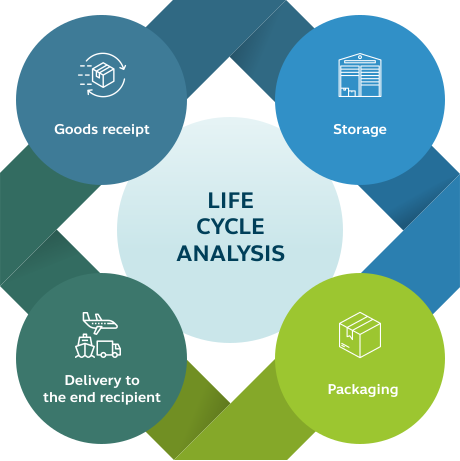
The Group has adopted Life Cycle Analysis (LCA) as a key tool for assessing the environmental impact of its end-to-end logistics services - spanning goods receipt, storage, packaging, and final delivery to the end recipient.
The analysis reveals that, as a logistics management service provider, the Group is not a direct source of environmental impact. Nevertheless, the majority of greenhouse gas emissions arise from freight transportation activities conducted through partners across air, sea, road, and rail modes — all of which fall under indirect emissions (Scope 3 Emissions). These findings provide a critical foundation for the Group to develop a targeted environmental impact reduction plan, with a primary focus on enhancing the capabilities of supply chain partners.
LCA results serve as the baseline for shaping the organization's environmental policies and targets — including greenhouse gas reduction goals, operational process improvements, and the development of new environmentally friendly services — ensuring that decision-making at every level of the organization is driven by credible, measurable, and fully transparent data for all stakeholders.
Elevating Environmental Supplier Management

Building on LCA findings that identify freight transportation through supply chain partners as the primary source of greenhouse gas emissions, the Group places strong emphasis on systematically raising the environmental standards of its partners, with the shared goal of reducing environmental impact across the entire logistics service chain.
The Group integrates environmental standards into every stage of supplier management from the screening and selection of new suppliers and the establishment of environmental performance criteria to the regular monitoring and annual evaluation of existing partners while actively promoting practices that reduce pollution and improve resource efficiency, ensuring all supply chain activities are aligned with the organization's sustainability targets. These include, for example:
Environmental Standards in Supplier Selection and Evaluation
The Group has established clear environmental criteria and guidelines for the screening of new suppliers, and conducts annual environmental assessments of existing partners to ensure their operations continuously align with the organization's sustainability framework throughout all stages of logistics service delivery.
Promoting Environmentally Friendly Transportation
The Group encourages partners to maintain their truck engines in optimal condition at all times to minimize exhaust emissions and environmental pollution. The Group also advocates for the reduction of empty return trips and promotes Full Truck Load (FTL) operations to maximize vehicle space utilization, reduce fuel consumption, and lower greenhouse gas emissions per transport unit while effectively meeting customer requirements on both timing and cost.