

Triple i Logistics is committed to driving the organization toward transparency while upholding morality and ethics,
by instilling organizational values and culture according to the principles of good corporate governance, coupled with awareness of the roles and responsibilities of the Board of Directors, executives, and employees at all levels, to enhance competitiveness, pursue sustainable growth, and build confidence among shareholders and all stakeholders.
Good Corporate Governance Structure
Organizational Structure
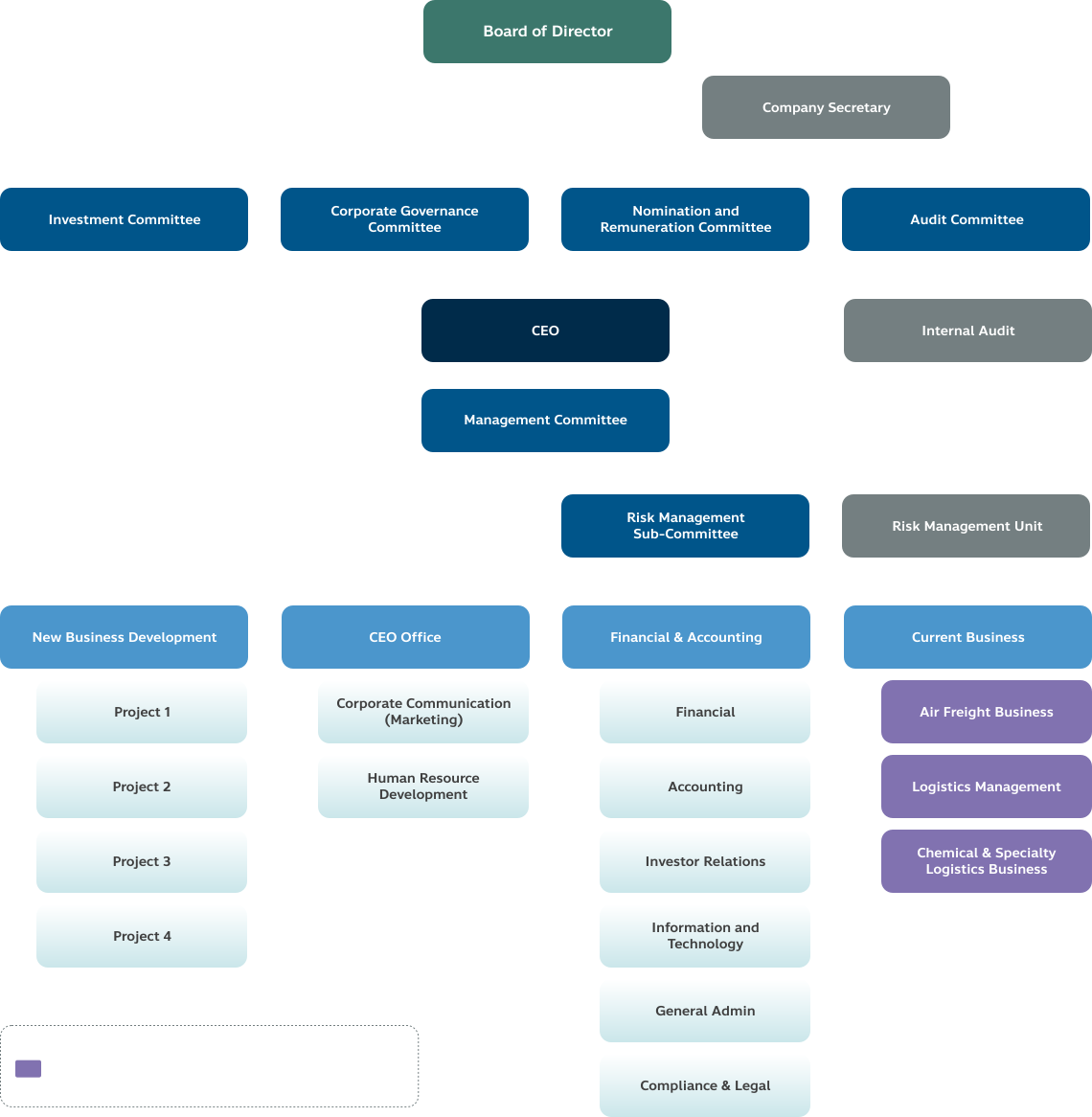
The Company’s organizational structure was approved by the Board of Directors on February 25, 2026. It is considered a clear management structure with the necessary checks and balances and can be always audited. It indicates a clear separation of roles, duties, and responsibilities between the Board of Directors and the management.

The Board of Directors recognizes the benefits of diversity in the structure of the board (Board Diversity), and has, therefore, established a form displaying the overall composition and qualifications (Skills Matrix) to determine the qualifications of directors to be recruited. The matrix takes into consideration the essential skills that are still lacking, including qualifications that are appropriate and consistent with the composition and structure of the directors according to the Company’s business strategy plan that does not impose any limitations on gender, age, race, religion, or any other differences.

In selecting the Company’s Board of Directors, the criteria and process for selecting the Board of Directors take into account the diversity of qualifications which include independence, knowledge and ability, experience, skills, specialization, as well as gender, race, and age, to ensure that the composition of the Company’s Board is appropriate for corporate governance and can respond to changes in the global economic, social, and environmental situations that may affect the Company’s business growth. The Company has, therefore, determined the composition of the Board’s knowledge and expertise (Skills Matrix) for consideration in selecting desired directors along with other attributes that are appropriate and consistent with the composition and structure of the Board according to the Company’s business strategy. Additionally, the Company also uses the Director Pool database of the Thai Institute of Directors Association (IOD) to consider recruiting new directors through a transparent process that is aimed at creating confidence for its shareholders for the maximum benefit to the organization and the needs of the stakeholders.

The Company requires that the performance of the Board of Directors be evaluated at least once a year, which is a self-assessment of the performance of the entire group and each individual, the results and recommendations of which are then used for further improvement and development.
Furthermore, the Board of Directors has assigned the Nomination and Remuneration Committee to evaluate the performance of the Chief Executive Officer, with evaluation criteria covering sustainability dimensions including financial, environmental, social, and/or corporate governance aspects, to reflect the integration of sustainability issues into the Group’s operations.
Governance Mechanisms and Risk Management

Prevention of Conflicts of Interest
The Company has established a policy on the prevention of conflicts of interest, based on the principle that any decision in the conduct of business activities must be made for the maximum benefit of the Company and its shareholders, and actions that may give rise to conflicts of interest should be avoided.
Supervision of the Use of Inside Information
The Company has established a policy on the prevention of the use of inside information, prescribing measures for overseeing directors, executives, and management-level personnel in the accounting or finance function at the manager level or above, as well as employees of the Group, regarding the use of inside information that has not yet been disclosed to the public for personal benefit, including securities trading in compliance with laws and the principles of good corporate governance.
Governance of the Company and Subsidiaries
The Company has established a policy on the governance and management of subsidiaries, with the objective of prescribing both direct and indirect measures and mechanisms for the Company to govern and manage the business of its subsidiaries and associated companies, including monitoring compliance with such established measures and mechanisms, to protect the Company’s investment interests in its subsidiaries and associated companies.
Personal Data Protection
The Company has established a Personal Data Protection Policy, prescribing clear guidelines on the handling of personal data, such as collection, storage, usage, and disclosure, as well as the rights of data subjects. The Group communicates and provides training to personnel throughout the organization, with annual knowledge assessments to ensure that personnel have the knowledge and understanding to comply with applicable legal requirements.
Building an Enterprise Risk Management Culture
The Group supports the integration of risk management into the organizational culture, starting with the Board of Directors and all sub-committees, and management at all levels, to lead the establishment of effective risk management processes and encourage all employees to take responsibility for identifying, managing, and reporting risks regarding their roles and responsibilities to the Risk Management Department. Risk management is also included as part of the Group’s annual training course to build awareness and improve personnel capabilities to identify, manage, and mitigate risks, applying to directors, executives, and personnel at every level to ensure effective risk management across all parties.